Minolta Maxxum 3 User Manual
Posted in:admin
Lenses for SLR and DSLR cameras. A collection of lenses a DSLR owner might have. These are three Olympus zooms 4. Sigma prime 3. 0 mm, all for the Four Thirds System. The FastPictureViewer Codec Pack contains image decoders codecs that enables robust support for 45 image formats, including RAW formats from more than. ORPHAN CAMERAS. COM The M. Butkus library of camera instruction manuals Where FILM camera instruction manuals have been found for FREE since 1997 donations. This article is about photographic lenses for single lens reflex film cameras SLRs and digital single lens reflex cameras DSLRs. Emphasis is on modern lenses for 3. SLRs and for DSLRs with sensor sizes less than or equal to 3. Interchangeable lensesedit. Canon EF and Nikon F lens mounts are rivalling. Canon EF Nikon FMost SLR and DSLR cameras provide the option of changing the lens. Buy Sony AMount to EMount Lens Adapter Black features Adapt AMount Lens to Fit EMount Camera, Auto Exposure Support. Review Sony Lens Adapters, General Lens. View and Download Minolta Maxxum 9000 owners manual online. Maxxum 9000 Digital Camera pdf manual download. This enables the use of lens that are best suited for the current photographic need, and allows the attachment of specialized lenses. Film SLR cameras have existed since the late 1. DSLRs became affordable around the mid 1. Some manufacturers, for example Minolta, Canon and Nikon, chose to make their DSLRs 1. SLR lenses in the beginning, allowing owners of new DSLRs to continue to use their existing lenses and get a longer lifespan from their investment. Others, for example Olympus, chose to create a completely new lens mount and series of lenses for their DSLRs. The Pentax SLR camera K mount system is backward compatible to all previous lens generations from Pentax, including the latest digital SLRs like the K 3 and K 5. A Pentax K mount lens from the early 7. Pentax DSLR although it may not provide features that are included in newer lenses e. There are a few exceptions from the MZ and ZX series of Pentax film cameras that do not work with some of the older lenses. As implied by the above, lenses are only directly interchangeable within the mount system for which they are built. Mixing mounting systems requires an adapter, and most often results in compromises such as loss of functionality e. Further, in some cases the adapter will require an additional optical element to correct for varied registration distances the distance from the rear of the mount to the focal plane on the image sensor or film. Adapters may not be available to bridge every combination of lens mount and camera mount. Aperture and depth of fieldedit. Minolta Maxxum 3 User Manual' title='Minolta Maxxum 3 User Manual' />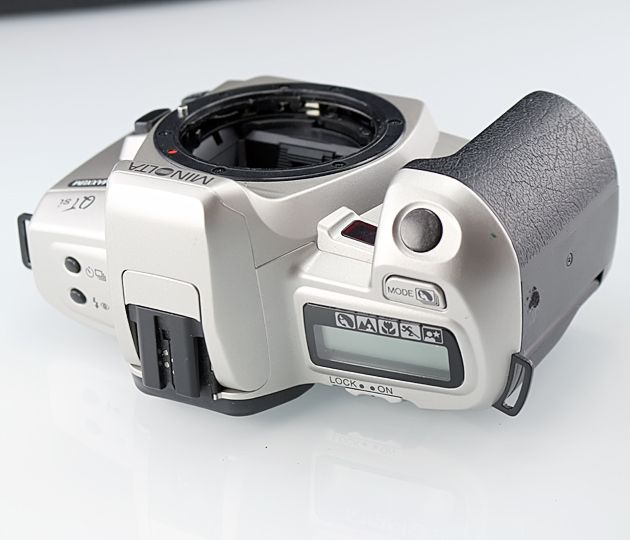 Large 1 and small 2 aperture. The aperture of a lens is the opening that regulates the amount of light that passes through the lens. It is controlled by a diaphragm inside the lens, which is in turn controlled either manually or by the exposure circuitry in the camera body. Imports a variety of camera raw file formats, interactively performing color and level corrections while the images are still 16 bit. Also includes batch and. Most SLR and DSLR cameras provide the option of changing the lens. This enables the use of lens that are best suited for the current photographic need, and allows the. The relative aperture is specified as an f number, the ratio of the lens focal length to its effective aperture diameter. A small f number like f2. Upkar Publication Books For Railway Free Download more. Aperture settings are usually not continuously variable instead the diaphragm has typically 51. The normal full stop f number scale for modern lenses is as follows 1, 1. A slow lens one that is not capable of passing a lot of light through might have a maximum aperture from 5. Fast lenses are by definition larger than slow lenses for comparable focal length, and typically cost more. The aperture affects not only the amount of light that passes through the lens, but also the depth of field of the resulting image a larger aperture a smaller f number, e. Focal length and angle of vieweditThe focal length of a lens, together with the size of the image sensor in the camera or size of the 3. A lens is considered to be a normal lens, in terms of its angle of view on a camera, when its focal length is approximately equal to the diagonal dimension of the film format or image sensor format. The resulting diagonal angle of view of about 5. A wide angle lens has a shorter focal length, and includes more of the viewed scene than a normal lens a telephoto lens has a longer focal length, and images a small portion of the scene, making it seem closer. Lenses are not labeled or sold according to their angle of view, but rather by their focal length, usually expressed in millimeters. But this specification is insufficient to compare lenses for different cameras because field of view also depends on the sensor size. For example, a 5. Nikon D3 a full frame camera provides approximately the same field of view as a 3. Sony 1. 00 an APS C camera. Conversely, the same lens can produce different fields of view when mounted on different cameras. For example, a 3. Canon EOS 5. D full frame provides a slightly wide angle view, while the same lens mounted on a Canon EOS 4. D APS C provides a normal or slightly telephoto view. In order to make it easier to compare lenscamera pairs, it is common to talk about their 3. For example, when talking about a 1. Four Thirds System camera, one would not only indicate that it had a focal length of 1. This way of talking about lenses is not just limited to SLR and DSLR lenses it is very common to see this focal length equivalency in the specification of the lens on a digicam. Values in the following table are approximate, and apply to rectilinear lenses only, not to fisheye lenses. Sensor size 3. 5 mm or full frame. APS HAPS CFoveon X3a 1Four Thirds. Crop factor 1. 0. Lens view. Angle of viewdeg. Focal length mmUltra wide angle. Typical wide angle. Slightly wide angle. Normal5. 94. 74. Portrait lens. Multiply by crop factor to get the focal length. Telephoto. 18. 13. Long telephoto. 83. Very long telephoto. Some cameras usingthis sensor size 3. Canon EOS 1. Ds. Canon EOS 1. Ds IICanon EOS 1. Ds IIICanon EOS 1. D XCanon EOS 1. D X Mark IICanon EOS 5. DCanon EOS 5. D Mark II Mark IVCanon EOS 5. DSCanon EOS 6. DNikon D3 X, S, D4 S, D5. Nikon D7. 00, D8. D6. 00, Df, D8. 10, D7. Sony Sony 8. 50, Sony 9. Sony 9. 9, Sony 7Sony 7. RLeica M9, M9 P, M Monochrom, M E, MCanon EOS 1. DCanon EOS 1. D II NCanon EOS 1. D IIICanon EOS 1. D IVKodak DCS 4. 60 7. Leica M8. Canon EOS 7. D7. D Mark IICanon EOS D3. D6. 0Canon EOS 1. D 8. 0DCanon EOS 1. D, 3. 00. D 1. 30. DNikon D1 H,XNikon D2. H Hs,X,XsNikon D4. Alcohol Addiction Treatment Program. D9. 0Nikon D1. 00 D5. Nikon D3. 00. 0D7. Pentax ist D Series. Pentax K1. 0D K2. DPentax K 3, K 5, K 5 II, K 7, K 3. K 5. 0Pentax K m, K r, K x, K 5. Sony Sony 3. 3 Sony 7. Konica Minolta 5. D, 7. DSigma SD1. Sigma SD9. Sigma SD1. Sigma SD1. 4Sigma DP1. Sigma DP2. Canon EOS DCS 3. Leica Digilux 3. Olympus E 3. Olympus E 3. 0Olympus E 6. Panasonic DMC G1The crop factor in this column refers to the original Foveon X3 sensor. Current versions of the Foveon X3 are standard APS C size with a 1. Types of lenseseditZoom lenseseditNikkor 2. The focal length of a zoom lens is not fixed instead it can be varied between a specified minimum and maximum value. Modern lens technology is such that the loss of image quality in zoom lenses relative to non zoom lenses is minimal, and zoom lenses have become the standard lenses for SLRs and DSLRs. This is different from the late 1. However, zoom lenses still typically have a lower maximum aperture than fixed focal prime lenses for the same weight and cost, especially for shorter focal lengths. Zoom lenses are often described by the ratio of their longest to shortest focal lengths. For example, a zoom lens with focal lengths ranging from 1. Typical zoom lenses cover a 3. Super zoom lenses with a range of 1. The maximum aperture for a zoom lens may be the same constant for all focal lengths, but it is more common that the maximum aperture is greater at the wide angle end than at the telephoto end of the zoom range. For example, a 1. Zoom lenses with constant maximum apertures such as f2. Macro lenseseditMacro lenses are designed for extreme closeup work.